Be Holy

Feast of All Saints 2026

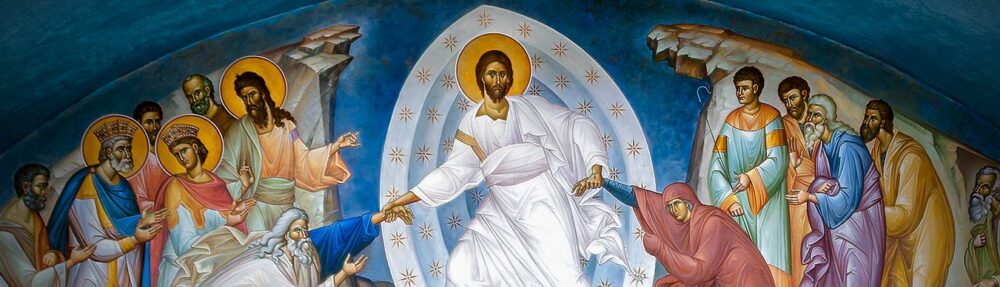
It may seem strange to you that we celebrate the feast of all saints on this day, the Sunday after Pentecost but we might rightly ask “what better day could there possibly be to make such a celebration?  In the west, on the Gregorian calendar, it is common practice to celebrate all saints day on November 1st.  For this reason we have a great cultural celebration on All Saints, or All Hollows Eve, AKA Halloween.  However for the Orthodox the feast of All Saints is directly, intimately connected to the celebration of the descent of the Holy Spirit at Pentecost.  So days and feasts and celebrations are ordered and placed in such a way that the Church is always teaching her children through every aspect of her life.

The feast of All Saints is placed on the Sunday directly following Pentecost to show us something and give us a glimpse into the life of the kingdom.  Sanctity is made possible through the work of the Holy Spirit.  Holiness is made possible through the work of the Holy Spirit.  Saints are made possible through the descent of the Holy Spirit.  In the life of the Church there are many many saints, in fact they are numberless.  Yet each day of the church year we commemorate some of them, typically those who reposed or fell asleep on a particular day.  Yet for other even more important saints we might celebrate not only the day that they died but other days as well such as the day they were conceived or the day they were born as we see with both St. John the Baptist as well as the Holy Virgin and Mother of God.  

St. Paul speaks of all of the multitude of the saints as a “great cloud of witnesses.”  A witness according to our Christian definition is one who witnesses or testifies to the truth of Jesus Christ.  Our word witness comes from the Greek work for martyr.  A martyr is one who boldly proclaims and bears witness to the truth of the gospel and the person of Jesus Christ. Those who died for their faith in Christ as well as those who lived righteously for their love of God.  The martyr is one who is not turned away by any threats of imprisonment or punishment or torture or anything else, even death.  Because to deny the Lord Jesus Christ is considered by the martyrs and saints to be much worse than death.  It is the death of the soul.  I should tell you that for the saints this applies not only to the teaching of Our Lord but to the teaching of His beloved bride, the Church, the body of Christ.  The Church is the presence of Christ on earth.  Her teaching is a reflection of God’s truth and goodness.  So when someone rejects the clear and unchanging teaching of the Church they in fact reject Christ Himself.  

Let us return to the saints for a moment.  We are blessed greatly by hearing and reading and studying the lives of the saints.  I wish that everyone who make a practice of always having a life of a saint that they are working through and these days we can easily find books translated into English as well as some websites with stories and biographies of the saints.  And my brothers and sisters, each of these saints and each of their stories teach us something new and different.  Each of them help us to grow in our own faith as we see their lives and their struggles and the unique ways that they brought their faith and love for Jesus Christ to life. No two saints are exactly the same just as no two humans are exactly the same.  The Holy Spirit affects and inspires each person differently.  

There is a short passage from the desert fathers that makes this point.  “Abba (Father) Poemen said that Abba John said that the saints are like a group of trees, each bearing different fruit, but watered from the same source. The practices of one saint differ from those of another, but it is the same Spirit that works in all of them.”  -Sr. Benedicta Ward, The Sayings of the Desert Fathers, 

This is one of the reasons why it is so important to learn from the saints but we should never try to imitate them in the details of their lives and struggles.  What might work for one person may actually hurt another.  The beauty of our faith is that God gives each one of us exactly what we need to grow and become saintly.  This may come as a surprise to you.  You might have thought that sanctity and holiness are for some other special people.  You might have thought that saints are born that way.  All of this is false.  We were all born with the same nature.  It is the work of Satan to discredit your faith and your sonship, the birthright given to you through holy baptism.  You were made to become saints.  God gave you life in order for you to use that life as you choose, yet in reality He desires to know you and to implant His life deeply within you.  He wants to have such an intimate union with us that we bring forth holy fruit.  That we have the ability to feed others of the fruit of sanctity.

But it is really important to understand that you cannot and will not become holy through your own efforts if those efforts are undertaken apart from God.  Because we are under the sway of the passions and evil desires.  So our efforts have to be rooted in Christ and His Church.  How often people come to confession and they say, “I will try to be less angry, I will try to have less lust, I will try to be more humble etc.”  This completely misses the point.  It sounds like self-help.  Our way is the way of the saints, who try by drawing nearer to Christ on a daily basis.  That is the way given to us by our great role models and teachers of the Christian life.  

St. Macarius the great writes, “Whatever the soul may think fit to do itself, whatever care and pains it may take, relying only upon its own power, and thinking to be able to effect a perfect success by itself, without the co-operation of the Spirit, it is greatly mistaken. It is of no use for the heavenly places; it is of no use for the kingdom – that soul, which supposes that it can achieve perfect purity of itself, and by itself alone, without the Spirit. + St. Macarius the Great, Spiritual Homilies, Homily 24

We run to Christ on a daily basis to receive something that is foreign to our broken human nature.  We run to receive the treasure of the grace of the Holy Spirit.  This separates the saints from everyone else.  Those who allowed the Holy Spirit to adorn the walls of their hearts now themselves adorn the walls of the churches throughout the world.  May we all join them as one family of saints.  AMEN.  

Source: Sermons

Come and Abide in Us

The Reading from the Acts of the Apostles. (2:1-11) and from the Holy Gospel according to St. John. (7:37-52; 8:12)

Today we have the privilege to celebrate a joyous and glorious feast.  This is the culmination of Pascha, the conclusion of these holy fifty days with a generous gift from the Lord.  We began these days with the celebration of life through Our Lord Jesus Christ’s holy resurrection, through his conquering of sin and death itself.  And now we complete this festal season with something new and quite extraordinary.  With the gift of the Holy Spirit.

Some will wonder, why is this so important?  Wasn’t the Holy Spirit moving and working and inspiring people throughout the scriptures?  Absolutely.  That is true.  Yet our God willed that we should come into a new relationship with Him through the Lord Holy Spirit.  That somehow the Holy Spirit would be given to us in a new and wondrous way.  That it should become a part of us.  That we should not only be created in the image and likeness of God but that we should also become temples of the living God. In fact we might even say that there will never again be another temple, at least not as we properly understand that word “temple.”  We know for instance that the temple in Jerusalem will be built again before the end times, but that is neither here nor there for us as Christians.  The temple built of stone is nothing.  It is an empty and hollow shell.  It will be less than worthless to the people of God.  It will not be the place where God dwells or where the people meet God.  Rather, those who belong to Christ are themselves holy temples and dwelling places for the Lord almighty.

Many of you know that on Saturday evenings we celebrate Great Vespers.  What some of you may not know is that Great Vespers is actually the start of the liturgical day in the Orthodox Church.  As we see in the pages of Holy Scripture, the day begins on the previous evening and concludes in the morning.  On the day of a great feast this vespers is accompanied by Old Testament readings to help us prepare for the feast.  Last night one of the readings we heard was this one from the Prophecy of Ezekiel (36:24-28).

“Thus saith the Lord: I will take you from among the nations, and gather you out of all countries, and will bring you into your own land; and I will sprinkle clean water upon you, and ye shall be clean from all your filthiness and from all your idols, and I will cleanse you. And I will give you a new heart, and a new Spirit will I give you; and I will take away the stony heart out of your flesh, and I will give you a heart of flesh, and I will put My Spirit within you, and cause you to walk in My statutes, and ye shall keep My judgments and do them. And ye shall dwell in the land that I gave to your fathers; and ye shall be My people, and I will be your God.”

“You shall be my people, and I will be your God.”  Wow.  What a powerful statement, but more than this it is a new reality for us.  We are not just people, we are God’s people.  And He is not just some god, He is in fact our God.  He is the one with whom we have a personal, familial and intimate relationship.  He who once dwelt in the temple in Jerusalem, has chosen, by His grace, to dwell within those who are baptized and chrismated, in those who love His Son and His commandments.  But with God all gifts are given with an expectation.  The gift is meant to be used properly.   The gift requires something of us.  “To whom much has been given, much is expected.”

  St. Gregory the great of Rome writes, “‘And my Father will love him, and we will come to him and make our home with him’ [John 14.23]. My friends, consider the greatness of this solemn feast that commemorates God’s coming as a guest into our hearts! If some rich and influential friend were to come to your home, you would promptly put it all in order for fear something there might offend your friend’s eyes when he came in. Let all of us then who are preparing our inner homes for God cleanse them of anything our wrongdoing has brought into them.”  + St. Gregory Dialogos, on Pentecost

St. Gregory speaks of welcoming the Holy Spirit of God into your hearts as you would welcome your beloved friend or an esteemed guest into your own home.  He tells us to work to tidy up that space we call our home.  It should be spotless and neat.  It should be a place where God would like to lay His head.  One day I flew somewhere and landed late.  I went straight to my hotel which I had booked on one of the discount sites.  After I grabbed my key I went to my room and one thing after another was not right or was out of order.  The lamp shade was partially warped and melted.  The dresser was broken.  Everything looked unkempt.  Although I was exhausted I could not, my body would not let me relax and lay my head down.  I kept thinking to myself.  If everything here is in such bad shape, imagine how little care was taken to clean this place.  I couldn’t rest.  But my beloved, the Lord the comforter, the Holy Spirit is the same with us.  He does not rest when He sees that our soul is disordered and filthy with sins.  He wants to rest there within us, but what kind of a space have we made for Him?  Have we prepared ourselves for Him at all?  

How do we prepare a place for the Lord?  Through our heartfelt repentance and confession.  Through our desire to run away from sin and towards the good. Through our struggle to love God and our neighbor.   Through our life of obedience to the commandments and teachings of Christ.     

Let’s hear these words from St. Nikodemos of the Holy Mountain, “The grace of the Holy Spirit which is given mystically to every Christian when he is baptized acts and is manifested in proportion to our obedience to the commandments of the Lord. That is, if a Christian obeys the commandments of the Lord more, grace acts with him more, while if he obeys them less, grace acts within him less. Just as a spark, when covered in the ashes of fire becomes increasingly manifest as one removes the ashes, and the more fire wood you put the more the fire burns, so the grace that has been given to every Christian through Holy Baptism is hidden in the heart and covered up by the passions and sins, and the more a man acts in accordance with the commandments of Christ, the more he is cleansed of the passions and the more the fire of Divine grace lights in his heart, illumines and deifies him.” + St. Nikodemos of the Holy Mountain, Christian Morality

This is our calling, our purpose and our potential through the Holy Spirit.  Glory be to God forever AMEN.

Source: Sermons

Thirst!

The Reading from the Holy Gospel according to St. John. (4:5-42)

How beautiful is Our Lord Jesus Christ?  How overflowing is His love?  How merciful is His heart towards us as sinners?  The moment that we think we have an answer to these questions Our Lord breaks through our preconceived notions and shatters them completely and shows Himself to be far above anything that we think that we understand.  This became clear to me once again as I read and prepared for this week’s gospel reading.

We are told that the Lord Jesus Christ was in the region of Samaria.  As many of you know, this is not a Jewish region.  Samaritans are not Jews.  They are like an offshoot from Judaism, they would be something like schismatics, those who make a schism or break off from the larger group.  I believe that the Lord Jesus Christ came to this particular reason, not because He was thirsty for water, but because He thirsted to do the will of His Father and to bring a certain Samaritan woman to salvation.

Not so coincidentally this woman whom we call Photini, came to the well, but she did so at a very strange hour, at the sixth hour or noon.  To me this is strange since typically in a warm climate the people will go to the well either very early in the morning or very late in the day after the sun has started to go down.  Perhaps she was going to the well in the middle of the hot sun because she did not want to encounter anyone.  Perhaps she felt shame over the state of her life and her situation.

In fact we are quite sure that she felt shame since she tried to hide her broken situation from the Lord Jesus Christ when He told her to go and call her husband and she tried to lie to his face saying “I have no husband.”  

But first we notice something quite beautiful.  Our Lord asks her for a drink.  He sees this woman and He knows her to be someone who is living in sin.  He comes down to her level.  He doesn’t behave as if He is above her, although He is in fact above all the heavens and the earth.  He bends low in His person in order to ask her for a drink of water.  This is really quite important.  It is so shocking to her that she questions him because it is well known that Jews don’t have any dealings with Samaritans.  They were considered like a different class of people who did not honor God and believe as the Jews believed.  Yet He condescends not only to speak with her as a Jew but as the Son of God.

He does this because through appearing to need her assistance, He gets her to open up and to enter into a conversation.  This is always the path to salvation, conversation and engagement with Jesus Christ.  What follows is the single longest conversation that Our Lord had with one person in the whole New Testament.

He asked her for water but in fact He was getting ready to give her living water.  The water that she could offer him was natural water from the well.  One would drink some of it and just a little while later they would be thirsty and would require another drink.  Yet the water that Our Lord would offer her would be water that never runs out, water that continually refreshes, water that changes life forever.  He promised her this water and He immediately grabbed hold of her interest.  She wanted this water because she was tired and thirsty, but He knew that what she was really after was something much deeper.

In our lives we grow thirsty and tired.  We thirst for so many things and then when we receive them we are still surprisingly unhappy.  Think for a moment of the multitude of pop stars and actors who had everything, fame, fortune, influence and yet they were not happy and kept running to try to satisfy the thirst even more and typically because they ran towards the wrong things they found this thirst was never satiated.  They grew even more thirsty and they would follow these urges towards their own destruction, often through broken relationships and drugs among other things.  

Each one of us also has thirsts.  You can’t pretend that you don’t have them.  They are part of the human condition.  But where do we go to receive refreshment?  Where do we go to have our thirst quenched?  For Photini, she was thirsty for love and companionship.  So thirsty in fact that she was willing to live outside of the law of God to have it.  She had had 5 husbands, and we don’t know what happened to them.  We don’t know if they died or if they gave a certificate of divorce or what exactly happened to them.  And now this Samaritan woman was with a man to whom she was not married.  And she tried to hide this fact but the Lord saw right through her.  He examined her heart like a good surgeon and He knew immediately that she was seeking meaning in her life and that she was seeking deep and lasting love.

She found this deep and lasting love in the person of Jesus Christ.  From the very first moment that He spoke with her, He began to bestow His grace on her.  He began to fill her heart which was empty with that living water.  She allowed this to happen and because she engaged with Him, He filled her with a new joy and over time we have learned through our sacred tradition that His thirst became her thirst, that is, she thirsted to do God’s will and to share this living water which was given to her, with others.  

“At Pentecost Saint Photini received baptism, along with her five sisters, Anatole, Photo, Photis, Paraskeve, Kyriake, and her two sons, Photeinos and Joseph. She then began a missionary career, traveling far and wide, preaching the good news of the Messiah’s coming, His death and resurrection.

When Nero, the emperor of Rome, began to persecute Christians, Photini and her son Joseph were in Carthage, in Africa, where she was preaching the Christian gospel. After Jesus appeared to Photini in a dream, she sailed to Rome. Her son and many Christians from Africa accompanied her. Photini’s arrival and activity aroused curiosity in the capital city. Everyone talked about her, “Who is this woman?” they asked. “She came here with a crowd of followers and she preaches Christ with great boldness.”

Soldiers were ordered to bring her to the emperor, but Photini anticipated them. Before they could arrest her, Photini, with her son Joseph and her Christian friends, went to Nero. When the emperor saw them, he asked why they had come. Photini answered, “We have come to teach you to believe in Christ.” The half-mad ruler of the Roman Empire did not frighten her. She wanted to convert him! Nero asked the saints their names. Again Photini answered. By name she introduced herself, her five sisters and younger son.

The emperor then demanded to know whether they had all agreed to die for the Nazarene. Photini spoke for them. “Yes, for the love of Him we rejoice and in His name we’ll gladly die.””

Her life continued with many more trials and tortures and yet she overcame them all because the water that was in her was much more powerful than the fire within the emperor.  Hers was the living water, the water of the crucified and risen Lord Jesus.  Let us also receive Christ gladly and we will receive everything that we need to quench our deepest thirsts and to drink of the water of His glorious resurrection.  Christ is risen!

Source: Sermons

Do Not Be Amazed!?

The Reading from the Holy Gospel according to St. Mark 15:43-16:8

“Do not be amazed; you seek Jesus of Nazareth, Who was crucified. He has

risen, He is not here; see the place where they laid Him. But go, tell His Disciples and Peter that

He is going before you to Galilee; there you will see Him, as He told you.”

These are the words of the angel at the scene of the tomb of Jesus. “Do not be amazed”. But let us think about that for a moment. The angel is telling these women not to be amazed although the event that has just taken place is completely utterly amazing by every possible definition of the word.

You know that often people who might mean well but who know very little about religion will tell you that truth is relative and that all major religions are basically the same etc etc, so on and so forth. I beg to differ. You see there is only one major religion in the world that claims that its leader was crucified like a common criminal. In most cases you see religions that look at their leaders in a triumphalistic way, but with a crucified Lord where is the triumph? Yet amazingly with Christianity we see another feature not found in the other major religious groups. The impossible, unfathomable claim that Jesus rose from the dead on the third day.

I submit that no other religion has the guts to make such a claim because no one could even imagine such an event. Who in their right mind would believe it? Even in the case of celebrities such as Elvis we see that people always imagine that he is alive…the difference is that some are convinced that he never actually died. But that is hardly the case with Jesus of Nazareth. His crucifixion was a public event seen by many. His disciples went into hiding for fear of the Jewish authorities. They felt that they would be the next ones to be crucified for following Jesus.

So we as the hearers of this gospel are forced into this situation where the angel is telling the women not to be amazed while it is quite apparent that what has in fact taken place is epic, cosmic and yes, amazing. But here is the reason why the Angel tells them not to be amazed……The Lord Jesus not only told them all that He would do it, but since He is God, His ability to do it is simply not amazing. The angel understands this because he understands the true nature of the Son of God. Life is a simple thing to the source and giver, to the Creator of life.

When our thinking is forced to change in such a crucial way that is called a paradigm shift. With the true revelation of the identity of Jesus, there is a new paradigm, a new set of rules…..a new reality. 2 Cor 5:17 “Therefore if any man be in Christ, he is a new creation: old things are passed away; behold, all things are become new.” All things become new in the light of Jesus Christ, in the light of His suffering, His death and His defeat of death.

The resurrection is not simply an afterthought in our lives. It is not simply something that happened 2000 years ago to Jesus in a far away land. The resurrection is ours…..it is our hope and reason for a life of joy. It is a reminder that even when things in our life are looking bad, maybe terrible, nothing really scares us because Our Lord is greater than these things. If anything does scare us it should be that we don’t have enough faith and that we don’t take enough care for our souls to protect ourselves from falling into sin, for this we should each be terrified. But we shouldn’t worry about the things of this world and the threats of this life because Our Lord Jesus Christ has conquered the worst that the world could throw at Him while saying “Be of good cheer, I have overcome the world.”

The one who has overcome the world has overcome not only the little difficulties of life, He has overcome the worst things that we can even imagine. Injustice, cursing, reviling, slander, imprisonment, suffering, torture and finally death. If He is my Lord and Master and if He has endured and defeated all of this, and if He has permitted me to draw near to Him and to partake of His life, then shouldn’t I see the whole world and all of my life and all of my struggles and sufferings differently?

St. Barsanuphius of Optina writes, “You need not be despondent. Let those be despondent who do not believe in God. For them sorrow is burdensome, of course, because besides earthly enjoyment they have nothing. But believers must not be despondent, for through sorrows they receive the right of sonship, without which is impossible to enter the Kingdom of Heaven.”

The resurrection is indeed the amazing event that proves to us that the rules have changed. It proves to us that Jesus has overcome death and subjected it under His feet. This tells us that because He is on our side, we can and will overcome whatever is thrown at us. But we won’t so this by our own power and strength, we are powerless without Him. But through Him, we become “a new creation.”

It is true that until we begin to understand the identity of Jesus Christ as the only Son of God we are amazed by the story of the resurrection. But after we understand His identity, the story is much less amazing because it is a story about life and life is the signature of God. Yet we are still amazed because He has allowed each of us the opportunity to enter into His unending life.

May we see His signature all over our own lives.

(based on homily preached April 29, 2012)

Source: Sermons

Hosanna!

Palm Sunday

The Reading from the Holy Gospel according to St. John. (12:1-18)

Let us step back in time together. Every time we enter the Church and hear the Holy Gospel we are indeed stepping back in time to make remembrance. Remembrance of what? Remembrance of the holy and sacred ways that God has worked among His people. This remembrance is not simply a reminiscence of the past, it is a living remembrance that we enter into. As the people of God, as those who were baptized and became members of the household of God, this story is not just a story, it becomes our story. And we believe that the story continues on a daily basis in the lives of those who live for and with Jesus Christ. For others it is just a story. Even if you believe in Jesus but you reject to live in the manner prescribed by Christ and His Church, then the remembrance of the activity of God is not alive in you, it is simply a story that you have heard but haven’t entered into. It has not become a part of who you are because you have not become a part of Christ by your life.

The Church invites us again and again throughout the week, to humble ourselves and to enter into this story. To make the story of God’s redemption more than just a story, to make it our personal story. We must make it our story but we can’t unless we are willing to look closely at ourselves. Unless we are willing to bear some pain and some shame and really begin to acknowledge our failings and our brokenness. We can’t do that if we boldly and pridefully lie to ourselves and pretend that we are well when we are sick. We can’t acknowledge our brokenness and failings if we live deep in sin and then imagine that our life is well pleasing to God. A Christian moves from potential life to actual life through the painful road of humility. A naked and brutal admission that we are sick and in need of a physician. A courageous admission that we are lost and in need of a light. A powerful admission that we are sinners and that we need a savior.

We go through the beauty and majesty and the horror and pain and shock of this story every year so that we will remember and once again enter into this story with our own brokenness and pain. So that we can again raise our voices with the voices of the crowd who met Jesus Christ on that fine day as He entered into the gates of Jerusalem riding on a donkey and we say with them: “Hosanna in the highest! Blessed is He that comes in the name of the Lord!” But we can’t say “Hosanna!” unless we mean it. Hosanna means “Save us, we pray! Or We pray that you will save us!”

So we have to mean it and we can’t mean it unless we understand ourselves and come to terms with our need for a redeemer. We prepare ourselves to walk this lonely and difficult road with Christ firstly by acknowledging our own lonely and miserable condition. No more masks, no lies, no distractions. The worst lies are the ones that we tell ourselves because those are the lies that keep us from finding healing, they keep us from knowing God. We humans are quite good at lying about our own condition. We even try to lie to God and to others around them to convince them that we are not sinners, but really upright, righteous people. But please understand, each of us is required to enter into this holy week as we truly are, empty and helpless and ready to receive what Christ will offer us and nothing more.

The people who stood at the gate waiting for Christ came there and created a great commotion out of genuine excitement and anticipation of what Christ was going to do. They had just witnessed the unbelievable events surrounding the raising of Lazarus, just a day earlier. This was the greatest miracle that anyone had ever seen. Now they waited to see what God would do next through His Messiah, His chosen one, because of course they did not yet realize that the One who they waited for and called out to was in fact the Son of God. They figured him to be an earthly king.

As we enter into Holy Week maybe we can also come with some enthusiasm in our hearts. Instead of dreading a long week of many hours of services, perhaps we can bring ourselves joyfully because we know what God has done and we are being invited to once again enter into the story, to live His story and to allow Our Lord Jesus Christ to ride into our hearts and minds just as He rode into Jerusalem on that Palm Sunday long ago.

Perhaps as we see what our Lord has suffered out of love for us, we will ourselves have the courage to suffer a little bit for Him. Perhaps as we listen to the holy hymns and readings we will gain new strength to be like the Lord and carry our crosses patiently and as we move through this week we will once again be reminded that the life we now share was made possible only through the love of God for mankind. Everything that you will see and hear and experience is for you. It is a part of you because you have become a part of Christ. It is your story. It is your master and Lord who suffered. It is your master and Lord who was led like a lamb to the slaughter. It was your master and Lord who offered Himself for the life of the world. It is your master and Lord who will rise from the dead and as He rises will lift us up out of the tombs if only we will reach out to Him and cry “Hosanna!” And Glory to to God forever AMEN.

Source: Sermons

Are you merciful?

The Reading from the Holy Gospel according to St. Matthew. (25:31-46)

I want to share a few words from one of our modern saints, St. Nektarios of Aegina. He said,

“After the end of the General Judgment, the Righteous Judge (God) will declare the decision both to the righteous and to the sinners. To the righteous He will say: ‘Come, ye blessed of my Father, inherit the Kingdom prepared for you from the foundation of the world;’ while to the sinners He will say: “Depart from me, ye cursed, into everlasting fire, prepared for the devil and his angels.” And these will go away to eternal hades, while the righteous will go to eternal life. This retribution after the General Judgment will be complete, final, and definitive. It will be complete, because it is not the soul alone, as the Partial Judgment of man after death, but the soul together with the body, that will receive what is deserved. It will be final, because it will be enduring and not temporary like that at Partial Judgment. And it will be definitive, because both for the righteous and for the sinners it will be unalterable and eternal.” — St. Nektarios

According to our Lord in today’s gospel, this is coming for each of us. This will happen. Our Lord is not guessing or trying to scare us, He is telling us the truth out of His immense love for us. And according to this gospel passage the criteria for the judgment will be our love or lack of love for everyone even those who are the most difficult to love. Love even for those who are easy to ignore. According to Our Lord Jesus, God will accept and welcome those who open their hearts and welcome others into their lives.

This is not an easy task. To take care of the poor or to visit the sick or the prisoners or to help those in need is an effort. It requires a sacrifice of time and effort. But these are the things that make us like God, our Father. While none of this is easy, it is blessed by God! What is better, to have an easy life and lack God’s blessing or to have a difficult path that is infinitely blessed by the Lord? No doubt, the second option is better. Well, my brothers and sisters, that option is available to you.

This path is still open to you today. Take hold of this calling and this invitation to serve and to care for others who have no power to care for themselves. If we accept this and attempt to live this way, it will change us. We will be transformed by acts of love. Start with small acts of sacrifice for your own family and friends. This will help train you and prepare you for more and more. We become saints when our lives are a living sacrifice and this is your potential in Christ. And if we have not lived for others until now, if we have lived for ourselves and our own pleasures, let us consider turning back, repenting and confessing. Now is the time my friends, because God is waiting for us.

I will leave you with a short excerpt from the Canon of St. Andrew, which we will begin reading in about one week…“The end is drawing near, my soul, is drawing near! But you neither care nor prepare. The time is growing short. Rise! The Judge is near at the very doors. Like a dream, like a flower, the time of this life passes. Why do we bustle about in vain? [Matthew 24:33; Psalm 38:7]

Come to your senses, my soul! Consider the deeds you have done, and bring them before your eyes, and pour out the drops of your tears. Boldly tell your thoughts and deeds to Christ, and be acquitted.”

+ The Great Canon of St. Andrew of Crete, Mon 4.2-3

May we boldly give mercy that we may receive it from our King and Judge. AMEN.

Source: Sermons

The Freedom to Rebel

The Reading from the Holy Gospel according to St. Luke. (15:11-32)

If we desired to walk away from God would He prevent us from doing so? If we desired to betray Him would He stop us? If we truly desired to live in sin and rebellion and to destroy our own souls would God stop this from happening?

We see these questions answered in the parable of the prodigal son. Prodigal means wasteful or reckless. This reckless son desired to be far away from his father’s house. He desired to take his inheritance and leave. The father not only allowed him to leave but he honored the request and gave him his share of the inheritance. Likewise, God has done the same for us. Sometimes we have moments in our life when we allow our passions and feelings to direct our lives. We might even become convinced that we should run away from God or run away from His Church. When do this we demonstrate that we are absolutely like the prodigal son. We can be reckless and wasteful with the gifts that were given to us by grace from God.

Sometimes we become too haughty and prideful and we begin to think that our bodies or our brains or our talents or riches are our own to use as we please and we forget that health and intelligence and talents and wealth are gifts from our Father. This is a great sin. Yet as we see in today’s passage, God allows us to go on ignorant and reckless and prideful if that is what we desire. If we choose to leave the comfort of His home, which is actually the Church and if we choose to cut ourselves off from the table and the food that is served at the Father’s table, as did the prodigal, God will not stop us, just as the Father did not stop the son. The table would be the Holy Altar, and the food is the teaching of the Holy Church and her sacraments. These things give life to us and nourish us only when we are near to them and choose to partake of them with humility and joy. But we see that sometimes people, especially the young and immature, like this prodigal, desire something different. They see the comfort and warmth as uncomfortable. They see the teachings that are meant to give them life and they regard them as poison. They see their father’s love and they sense that it is painful. They can become curious about life outside their father’s home. They may desire to run away and they imagine that they will find something better on the outside, away from their Father’s house. And the Father will allow it.

If we desired to walk away from God and from His house and from the safety of His teachings and from the nourishment of His sacraments He would allow it. Why is this? Because He loves us. For a time He would put up a few obstacles and He would work very hard to turn our hearts back to Him, but He can’t force us. Our Lord did not even force Judas the betrayer to turn back, in fact He looked directly at Him and said, “do what you have to do.” Our Lord tells us the same. You feel that you need to walk away and betray Christ. You feel that you need to fall into sin. You feel that you need to be lazy. You feel that you need to put other things ahead of Christ. You feel that you need to reject the teaching of the Church. So be it. Christ will allow you to do so if that is what you desire.

The father in today’s passage allowed his son to leave and he gave him many riches and blessings right before he left. The father was wise. Had he not given him anything then the young man would have been resentful and had a cause for anger with his father. But later, he had no one to blame but himself. Likewise God has given us everything for our life. You can’t blame God for your situation. You received new life through baptism. You received the gift of the holy spirit in Chrismation. You receive spiritual nourishment and renewal through Holy communion. You receive divine food in the teachings of Christ and His Church. You received the blessings of the prayers of the saints. You were served and your wounds were tended to and cleaned by the servants of the house who work for the father. You received forgiveness and mercy through Christ and His Church. So you lacked nothing. So if we then choose to leave God, we are left without any excuse.

The young man first contemplated his departure from the house and then he executed it. We do the same. First we start with a seed of an thought towards sin and then we move from a seed to an action of rebellion. St. James writes,  “But each person is tempted when he is lured and enticed by his own desire. Then desire when it has conceived gives birth to sin, and sin when it is fully grown brings forth death.” James 1:14-15

If we choose to live like the prodigal, then we eventually find ourselves alone and empty just like the prodigal. But in fact, this was precisely why the father allowed his son to leave. Because he loved him and he knew that he couldn’t control him or change his heart through force. God our Father also loves us. He loves us so much that He will allow us to go wherever we please. But He is also wise. He knows that sometimes after we leave and we experience the pain of the world, the pain of our choices, the emptiness of our lives, the distance and the coldness away from God and from His house, then sometimes, some will come to their senses and return. Some will repent and in their pain and sorrow and hunger and thirst they will remember that their Father was always good to them. They might cry out to Him and run towards His house.

Many of us have experience this and we turned back, we repented, we came to our senses and ran back to the living God and to His Church because we realized that we were truly lost and our souls were withering without the grace of God and the life giving treasures of the Church. Thankfully the story of our lives doesn’t have to end in rebellion and in brokenness or spiritual death. Through the parable of the prodigal son we are witnesses to God’s generosity of spirit and mercy and true love for His children, for you and for me. Indeed we see that the father waits near the doors of his estate and looks for any sign of his sons return. When he catches a glimpse of his son, he doesn’t wait at the house, but runs to meet his son who was lost. He runs to embrace him and to celebrate his return.

If you have been struggling and living far away from God in your heart, know with certainty and faith that He is waiting for you precisely where you left Him. Turn around. Speak to Him. Apologize to Him. Invite Him back into your life. It is the joy of God to dwell within us and to truly be our Father and our God. He will forget everything in the past and will welcome you back into His house, in to His kingdom, not merely as a servant, but as His very son or daughter. But I leave you with a warning from St. Augustine who writes “God has promised forgiveness to your repentance, but He has not promised tomorrow to your procrastination.” -St. Augustine of Hippo

Glory be to God forever, AMEN.

Source: Sermons

Prayer, Obedience, and Thanksgiving

The reading from the Holy Gospel according to St. Luke. (17:12-19)

There were ten lepers who met Our Lord Jesus Christ as He was entering a village. Lepers are people who have a disease called leprosy. It is relatively uncommon in the first world countries but it is a disease that affects the skin. It is also contagious. When someone developed this disease it was akin to a death sentence because they were forced to live far away from the healthy people within their families and within the community. So they travelled together in packs of lepers.

These ten lepers saw Jesus and we are told that they “lifted up their voices” and said “Jesus, Master, have mercy on us.” For me there are at least 3 significant points we can take from this reading. The first is that it is necessary for each one of us to lift up our voices to God in prayer. We may not need to say many words, but the words that we say have to come from a genuine depth in our hearts, we need to follow the example of the lepers and lift up our voices, or the voice of our hearts to the Lord. It only took 6 words to grab hold of the attention of the Lord Jesus that day. 6 words changed their lives. The lepers who were completely cut off from the world around them and from their own towns and families somehow found a way, with merely 6 words, to receive the blessings of God incarnate. The words they used are familiar to us, especially to those who have practiced the Jesus prayer. This is an alternative version of the same prayer. Jesus, have mercy on us. Lord Jesus Christ, have mercy on me.

Our Orthodox tradition of spirituality and prayer tells us that these words, when repeated by one who is truly struggling to live according to the Lord and within the life of the Church, will open up new dimensions and avenues for increasing our knowledge of God and receiving grace to heal us. So these words should really be second nature to us. We should have them ready all day, at every moment. At the first sign of trouble, “Lord Jesus have mercy on me.” At the first sign of temptation or bad thoughts “Lord Jesus have mercy on me.” When you wake in the middle of the night with anxiety and worry, “Lord Jesus have mercy on me.” When you feel spiritually rotten and unable to do work, “Lord Jesus have mercy on me.” When you are preparing to undertake any work or project, “Lord Jesus have mercy on me.” When you are worried about someone, such as a friend or one of your children, “Lord Jesus have mercy on (name).” For spiritual inspiration, for renewal and for the cleansing of heart, we raise our voices with the name of Jesus Christ. The name of Jesus is so powerful as the Apostle Peter reminds us, “…there is salvation in no one else, for there is no other name under heaven given among men by which we must be saved.” Acts 4:12

Next we should take notice that after Our Lord heard the pleadings of the lepers, He gave them instructions. We notice that they immediately responded to His guidance. They obeyed without hesitation! How many times has the Lord tried to help us and to heal us but we refused to be healed? How did we refuse? We did not immediately follow through with obedience to His teachings and to the teachings of His body, the Church. The one is the extension of the other. If you love Christ, you must love His bride and His body, the Church for which He gave His life on the cross.

St. Cyprian of Carthage writes, “one cannot have God as his Father unless he has the Church as his mother.” It means that we show honor, reverence and deep respect to the teachings of Christ and His Church. We can’t piecemeal the teachings of the Church or of Our Lord Jesus Christ and pick and choose what is convenient for us. If we pick and choose it means that we worship our own minds and feelings, not the living God. So if you find someone who claims to love Christ but they don’t believe the teachings of the Church on basic theology and morality, you should run far away, because that person cannot help you or teach you. They won’t offer healing for your soul. Everything is given within the teachings of Christ and His Church for the healing of our souls and not to coddle our feelings or stroke our egos.

Frequently God shows us what we ought to do to be healed, He reveals things to us either through our reading or in our prayers or through the guidance of a priest or through the wisdom of a fellow Christian or some other avenue. How do we respond to that? With hesitation, with doubt, with a spirit of contradiction, or with faithful obedience?

Now as the lepers went away in obedience to the Lord, they were healed of the physical illness. This is remarkable on it’s own, but something even more remarkable happened at that moment. One single leper, who was a Samaritan, not a Jew, turned back and went to the Lord Jesus Christ to offer thanks and praise. He was so moved, so overwhelmed by what Christ had done in healing him that he fell on his face at the feet of Jesus and gave thanks.

It is such a powerful moment because this man was the only one who turned back to give thanks to God and it is even more powerful because we now know that this many was not a Jew. He was not of the people of God. Yet in his heart he was faithful and he showed the demeanor and the actions of one who truly knows God. How often has God answered our prayers? How often has God showed each of us mercy? How often has God healed us, in our souls and our bodies? Yet, if we are honest with ourselves, we don’t often give God the glory or praise which is due to Him. As the children of God, it is our task and our life to give thanks to God in every situation and condition. That might surprise us. We might be inclined only to give thanks when things are going well in our opinion, but that is not correct. God is always working on behalf of His children, even when we don’t pay attention or recognize this.

As St. Paul writes to the Ephesians, “giving thanks always and for everything to God the Father in the name of our Lord Jesus Christ..” (Eph 5:20) When the leper returned it pleased our Lord greatly. It likewise pleases Him when we come with gratitude and give Him praise for His many rich mercies. Only step back for a few moments and you will see the Lord’s hand all over your life and you will have many reasons to thank Him.

Finally, I leave you with a quote from St. John Chrysostom who writes,

“Let us give thanks to God continually. For, it is outrageous that when we enjoy His charity to us in deed every single day, we do not acknowledge the favor with so much as a word; and this, when the acknowledgment confers great benefit on us. He does not need anything of ours, but we stand in need of all things from Him. In point of fact, thanksgiving adds nothing to Him, but it brings us closer to Him. For if, when we recall the contributions of men, we are the more warmed by affection for them; much more, when we continually bring to mind the benefits of the Master towards us, shall we be more earnest with regard to His commandments.” + St. John Chrysostom, Homily 25, Homilies on the Gospel of St. Matthew

May each of us be like the Samaritan leper, filled with this gratitude to Christ for all of His great work towards us and may this gratitude be convertedinto acts and lives filled with holiness and love. AMEN.

Source: Sermons

What is the gospel?

The reading from the Holy Gospel according to St. Matthew. (4:12-17)

We hear really amazing words today as St. Matthew the evangelist quotes from Isaiah the prophet once again. We notice this as a heavy theme throughout the gospel according to St. Matthew. He is constantly quoting from the Scriptures. By the way, this word “scriptures” when it is used in the gospels and in the New Testament, as well as when it is used in the creed that we recite during the liturgy, this word refers to the books of the Old Testament. Now Matthew is constantly quoting from the Old Testament Scriptures for a very specific purpose. He is a Jew and his goal is to convince all of the Jews that this man Jesus of Nazareth is very special. That He is in fact the chosen one, the anointed one, the Messiah. Matthew uses the Old Testament to make his defense and to prove to those who have ears to hear, that Jesus is the Christ, and that everything that He has done was previously spoken of throughout the Old Testament Scriptures. Furthermore, he demonstrates that so much of the life of Jesus Christ was foretold by the prophets.

Now this is a very interesting claim. Those who are opponents of the Church, such as atheists and pagans, will say that we have no proof that the Old Testament was not tampered with. Perhaps, they claim, the Old Testament was rewritten or verses were added to it after the fact to make it seem like Jesus Christ fulfilled the prophecies when in fact it hadn’t happened. To those claims we offer the proof of the dead sea scrolls which were discovered between the years 1957-1956. Many of the scrolls that were discovered dated back to at least the 3rd century before Christ. They also demonstrated more than 95% textual accuracy including the scroll of Isaiah the prophet.

“But wait!” say the unbelievers, “Perhaps Jesus Himself engineered His life in such a way as to make sure that He fulfilled the prophecies that were written about the Messiah?” So according to this line of thinking, Jesus spent His time focused on fulfilling prophecies for the sake of fulfilling prophecies so that He would appear to be the Messiah. For instance, Jesus decided to ride into Jerusalem on a donkey to fulfill the prophecy that says “ Behold, your king is coming to you; righteous and having salvation is he, humble and mounted on a donkey, on a colt, the foal of a donkey.” Zech 9:9

Now let us examine that claim more closely. Did you know that most of the prophecies fulfilled by Our Lord Jesus Christ are completely out of His control? For instance, His birthplace and the place where He grew up are not possible to self-engineer. In addition it would be impossible to engineer the most important aspects of His life including the crucifixion and the actions of the soldiers such as casting lots for His garments and piercing His side with a spear or leaving His bones unbroken. All of these moments were prophesied hundreds of years before Jesus of Nazareth lived on earth and yet none of them can be manufactured at will.

Some of these points were further developed by a mathematician named Peter Stoner who calculated that the odds of any one person in history fulfilling just eight of the key Old Testament prophecies is about 1 in 10 to the 17th power or 1 in 100 quadrillion. Now if we try to understand this it is too difficult for the human mind. The numbers are simply too large. But here is one example that has been used to help:

“Suppose we cover the entire state of Texas with silver dollars, to the depth of 2 feet. Take one of the silver dollars and mark an “X” on it. Thoroughly mix the coins (including the one with the “X”). Spend any amount of time randomly walking around the state, blindfolded, and then randomly pick up one of the coins. What is the chance that the coin you randomly picked would be the one with the “X”? About the same as a person randomly fulfilling these eight prophecies.”

Now this is the probability with just eight key prophecies from the life of Our Lord Jesus Christ, while in reality He fulfilled about 300.

Of course we don’t use these points as empirical proofs for our faith, but they are bread crumbs that show us the way. They point to the truth. What is this truth? Jesus Christ Himself is the truth and the life. When we understand this with our hearts and live this hope in our bodies and in our bones, then we have light because Christ is the light of the world. His light wipes away our darkness. It wipes away the darkness of our hearts. It wipes away the darkness caused by our sins and sinful desires. This light of Christ, as we cultivate it in our lives, begins to truly attach to us. It changes us. It becomes a part of us.

We become filled with this light, the light of the grace of God, the light of the Holy Spirit. This is symbolized by the halo or the nimbus that we see around the heads of the saints in our iconography. The saints are like us but they are not people who sit in darkness or the shadow of death. That is reserved for those who either don’t know God or who choose to separate themselves from God. The saints are like us but they move towards Christ with their whole being, with their lives. They make friends with the light of Christ and they follow His teachings and the light of Christ becomes theirs. They become lamps that hold the flame of Christ. They are lamps that are capable of bringing the warmth and the light of Christ to others.

In our world there is still so much darkness. There are so many places where the light of Christ has not permeated, even in our own town or perhaps in our own families. But we were once in that same place, in the darkness and by God’s grace, we have received the Light. Now we are the ones who carry that light to the regions of darkness and to places that seem quite dead. We come to others with joy in our hearts and when we see them struggling and in darkness, we can gently, lovingly say “All is not lost. God exists and He is still working in the world. God loves you so much more than you could ever imagine. God proved it through His Son Jesus and His Son proved that His love was more powerful than any force that exists on earth, even more powerful than death itself. And those who turn from their wrong way of life and believe in Christ and are baptized will partake of this love and will also conquer death with Him.” That is the gospel and it still has the power to transform and change our lives one person at a time. And that is truly good news for all us. AMEN.

Source: Sermons

Baptism and The Renewal of Life

The reading from the Holy Gospel according to St. Mark. (1:1-8)

Today we hear the beginning of the gospel of St. Mark. According to some scholars there is a belief that the gospel of Mark was the “source material” for both Matthew and Luke when they wrote their gospels. In fact as you compare these three gospels, known as the synoptic gospels, side by side, you will see that they have many similarities. Some scholars believe that his work was written in Alexandria, Egypt, while others believe that it was written in or near Rome.

St. Mark begins this gospel with these words, “The beginning of the gospel of Jesus Christ, the Son of God.” We understand that the word Gospel here means “the good news.” It is a declaration of the work that God has done through His Son Jesus. St. Mark starts this gospel by attaching it to the words of Isaiah the prophet. He is connecting the work of Jesus Christ to what was anticipated and foretold through the Old Testament Scriptures. He writes, “As it is written in Isaiah the prophet, “Behold, I send my messenger before thy face, who shall prepare thy way; the voice of one crying in the wilderness: Prepare the way of the Lord, make his paths straight.”

Isaiah the prophet wrote this about John the baptist, calling him the messenger who will cry out to the people and tell them to “prepare the way of the Lord and make His paths straight.” St. Mark goes on to say, “John the Baptizer appeared in the wilderness, preaching a baptism of repentance for the forgiveness of sins. And there went out to him all the country of Judea, and all the people of Jerusalem; and they were baptized by him in the river Jordan, confessing their sins.”

John the baptist is mentioned in this gospel at this point in the church cycle because it is the Sunday before the great feast of Theophany (also called Epiphany) in some traditions. On this day of Theophany, which we will celebrate tomorrow evening, we commemorate and rejoice in the day that Our Lord Jesus Christ was baptized as well as the manifestation of the Holy Trinity above the river Jordan.

It should be mentioned that the baptisms of John and the Christian baptisms are not the same, however they contain some important similarities. First they are not the same because the baptism of John the baptist was mainly a symbolic baptism. It was an outward declaration of a change of heart and a change of our path. But wait a minute, did Jesus ask John the forerunner to baptize Him because He needed to change His heart or His path? Did Jesus ask to be baptized for the washing away of sins? Not at all. He was and is perfect and sinless at all times. Our Lord Jesus Christ was baptized in order to sanctify and bless the very act of baptism. He took a symbolic baptism and by allowing Himself to be baptized, he infused this activity with special grace that is given to us when we are baptized in water in the name of the Holy Trinity, the Father, the Son and the Holy Spirit. He blessed it and gave what was a ritual, real transformative power. In fact, this baptism is necessary for each and every one of us when we become Christians.

For us as Orthodox Christians, following the teachings of all of the apostles and especially St. Paul, baptism in Christ is the giving of newness of life. Baptism is the putting on of Christ. It is burial and resurrection with Christ. It is the washing away of sins. It is the adoption into the household of God.

Closely associated with this baptism is also the reception of the seal of the Holy Spirit which was in early times given through the laying on of hands by the apostles and is now given through the anointing with sacred Chrism. A few of you who were previously baptized as Christians will receive the anointing of Chrism tomorrow evening by God’s grace. By this anointing you will become temples of the Holy Spirit and you will become small “Christs” that is you will literally be anointed ones.

While the baptism differs from that of St. John the baptist, it is also similar in that it requires a true change of heart. As we prepare to celebrate this feast we hear these words of St. John the baptist and the prophet Isaiah before him, “prepare the way of the Lord and make His paths straight.” This word is of particular importance to those who are preparing to enter the Orthodox Church, but this word applies daily to every Christian. Prepare the way of the Lord, by preparing the way of your heart. Make His paths straight by making sure that your heart aims directly towards Christ, that your desire is focused on Jesus Christ, without any winding turns or obstacles in the way. A clear path. A sure path. A path that allows Christ to reach us without difficulty. A path that allows us to see God without obstructions. That is the path of a Christian.

When we examine our lives and we see things that are taking our focus away from God, when we see sins or sinful ways of thinking and living in our lives, that is a sign that the path to God is not clear and not straight. It is a sign that I must change again and turn back to Christ or risk being alienated from God. We believe that the Holy Spirit is working ceaselessly to convict us and turn us back to God whenever we stray. But what can we say about those who have lost hunger for God, or who have lost a sense of right and wrong. Lord have mercy is all we can say. For the rest, for those who struggle honestly, then their baptism is not just a one time event, but a continuous renewal through repentance and the work of the Holy Spirit. It is our goal to join our works to the work of the Holy Spirit so that there will be synergy between God and His beloved creation.

St. Nikodemos who writes,

“The grace of the Holy Spirit which is given mystically to every Christian when he is baptized acts and is manifested in proportion to our obedience to the commandments of the Lord. That is, if a Christian obeys the commandments of the Lord more, grace acts with him more, while if he obeys them less, grace acts within him less. Just as a spark, when covered in the ashes of fire becomes increasingly manifest as one removes the ashes, and the more fire wood you put the more the fire burns, so the grace that has been given to every Christian through Holy Baptism is hidden in the heart and covered up by the passions and sins, and the more a man acts in accordance with the commandments of Christ, the more he is cleansed of the passions and the more the fire of Divine grace lights in his heart, illumines and deifies him.” + St. Nikodemos of the Holy Mountain, Christian Morality

May the Lord make it so! AMEN.

Source: Sermons